


Advancing the Responsible and Trustworthy Use of AI in Business and Society
The Wharton Accountable AI Lab (WAAL) is dedicated to advancing the responsible development and governance of AI technologies. We believe that the immense business and societal benefits of AI cannot be fully realized without addressing its risks. As organizations worldwide grapple with new regulatory obligations and ethical concerns, our mission is to provide innovative research and practical solutions.
About the Lab
The Wharton Accountable AI Lab (WAAL) is a leading research hub focused on addressing AI’s ethical, regulatory, and governance considerations. As AI technologies continue to reshape industries and societies, the lab explores critical issues such as bias, privacy, legal responsibility, intellectual property, misinformation, job displacement, and manipulation, across both established machine learning and generative AI techniques.
Leveraging Wharton’s unique combination of legal and business expertise and global reach, the lab drives meaningful conversations among policymakers, industry leaders, and academics. Our work enhances research opportunities and provides actionable insights for effective AI adoption, promoting both innovation and societal good.
Research Areas
The Lab is a hub for faculty and affiliated researchers who are active in the relevant areas. We will also host events and recruit postdoctoral scholars.
AI Governance
How organizations can responsibly develop and deploy AI technologies, using techniques such as governance frameworks, standards, audits, codes of conduct, and compliance mechanisms.
AI Regulation
Legislation, administrative rules, and judicial decisions at the local, national, and international level around the world that cover the development, deployment, and uses of AI.
AI Ethics
Normative and behavioral considerations about AI’s moral implications and societal impacts, including AI personhood, allocation of responsibility, and implications for meaningful work.
Faculty Lead

Kevin Werbach
Liem Sioe Liong/First Pacific Company Professor
Professor of Legal Studies and Business Ethics
Chairperson, Legal Studies and Business Ethics
Faculty Lead, Wharton Accountable AI Lab
A world-renowned expert on the business, legal, and social implications of emerging technologies.
Author of extensive scholarship in technology policy, director of the Wharton Blockchain and Digital Asset Project, and former Counsel for New Technology Policy at the U.S. Federal Communications Commission, Kevin Werbach has spent more than two decades exploring major trends at the intersection of the internet, digital media, and communications.
Affiliated Faculty
University of Penn and Wharton faculty associated with the Wharton Accountable AI Lab are leading experts in AI, ethics, business, and analytics. They collaborate on groundbreaking research and provide thought leadership in the responsible use of AI.
Hamsa Bastani
Associate Professor of Operations, Information and Decisions
Associate Professor of Statistics and Data Science (secondary), The Wharton School
Areas of expertise: algorithmic bias and social impact of AI
Cary Coglianese
Edward B. Shils Professor of Law and Professor of Political Science; Director, Penn Program on Regulation, University of Pennsylvania
Area of expertise: AI governance
Peter Conti-Brown
Class of 1965 Associate Professor of Financial Regulation, Associate Professor of Legal Studies & Business Ethics, The Wharton School
Areas of expertise: financial regulatory models applied to AI safety
Michael Horowitz
Richard Perry Professor
Director, Perry World House
Areas of expertise: AI governance and national security
Danaë Metaxa
Assistant Professor of Computer and Information Science, School of Engineering and Applied Science, University of Pennsylvania
Area of expertise: algorithmic auditing
Sonny Tambe
Associate Professor of Operations, Information and Decisions
Faculty Co-Director, AI at Wharton
Areas of expertise: algorithmic bias and explainability
Fellows
Providing thought leadership and strategic guidance to the Wharton Accountable AI Lab.

Jon Iwry
Fellow, Wharton Accountable AI Lab

Honorable Radha Iyengar Plumb, PhD
Senior Fellow, Wharton Accountable AI Lab
Our Team

Traci Doyle
Senior Associate Director of Strategic Initiatives, Wharton AI & Analytics Initiative

Bhargavi Ganesh
Postdoctoral Researcher, Wharton Accountable AI Lab
Developments in Accountable AI
Expert analysis on the latest developments in the world of accountable AI.

SB 53: What California’s New AI Safety Law Means for Developers
California’s new Transparency in Frontier Artificial Intelligence Act (SB 53), signed into law in late September 2025, is the United States’ first statute focused squarely on AI safety. In particular, SB 53 is meant to address the possibility that an AI system could cause mass harm or serious economic damage—what is often referred to in AI governance circles as “catastrophic risk.” Read more.

EU AI Act Update: What the New Code of Practice Means for Business
The European Union’s new General-Purpose AI requirements are now live, and its newly finalized Code of Practice offers the clearest signal yet of what regulators will expect. Whether companies sign on to the Code or not, their business strategy, market reputation, and relationship with regulators will be shaped by the way they choose to respond. Read more.
Events
Explore the Wharton Accountable AI Lab’s latest events shaping the future of AI and its impact on society.

Accountable AI Research Conference
February 6, 2026
The Wharton School, University of Pennsylvania
This conference, intended primarily for faculty, researchers, and industry, brings together scholars from law and other fields to present work with a normative, legal, or public policy focus, emphasizing AI’s potential for impact on business practice and government actions. Read More »

Global Perspectives on AI Governance
May 19, 2025
Peking University, Beijing, China
Co-hosted by the Penn Wharton China Center, Wharton Accountable AI Lab, and Guanghua School of Management, Peking University
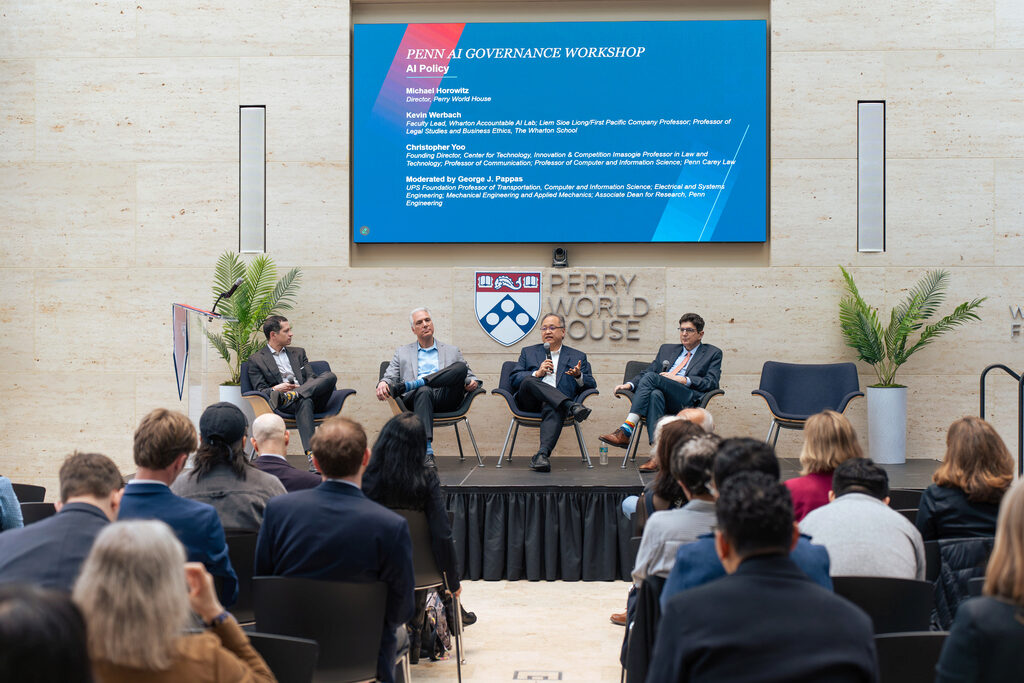
Penn AI Governance Workshop
April 4, 2025
University of Pennsylvania
Presented by the Wharton Accountable AI Lab and co-sponsored by the Wharton AI & Analytics Initiative, the School of Engineering & Applied Science, the Center for Technology, Innovation & Competition, and Perry World House. Read More »
In the News

The Wharton Accountable AI Research Conference Asks Who Should Govern AI, and How
Wharton Accountable AI Lab Launches New Forum on AI Governance and Accountability

Nano Tools for Leaders: Operationalize AI Accountability: A Leadership Playbook
Exploring the Governance of Artificial Intelligence

The Business Case for Proactive AI Governance

Wharton professor launches podcast focusing on artificial intelligence, interviews with experts

Community & Engagement
Stay connected with the latest insights, join ongoing discussions, and advance your expertise in responsible AI governance and implementation.
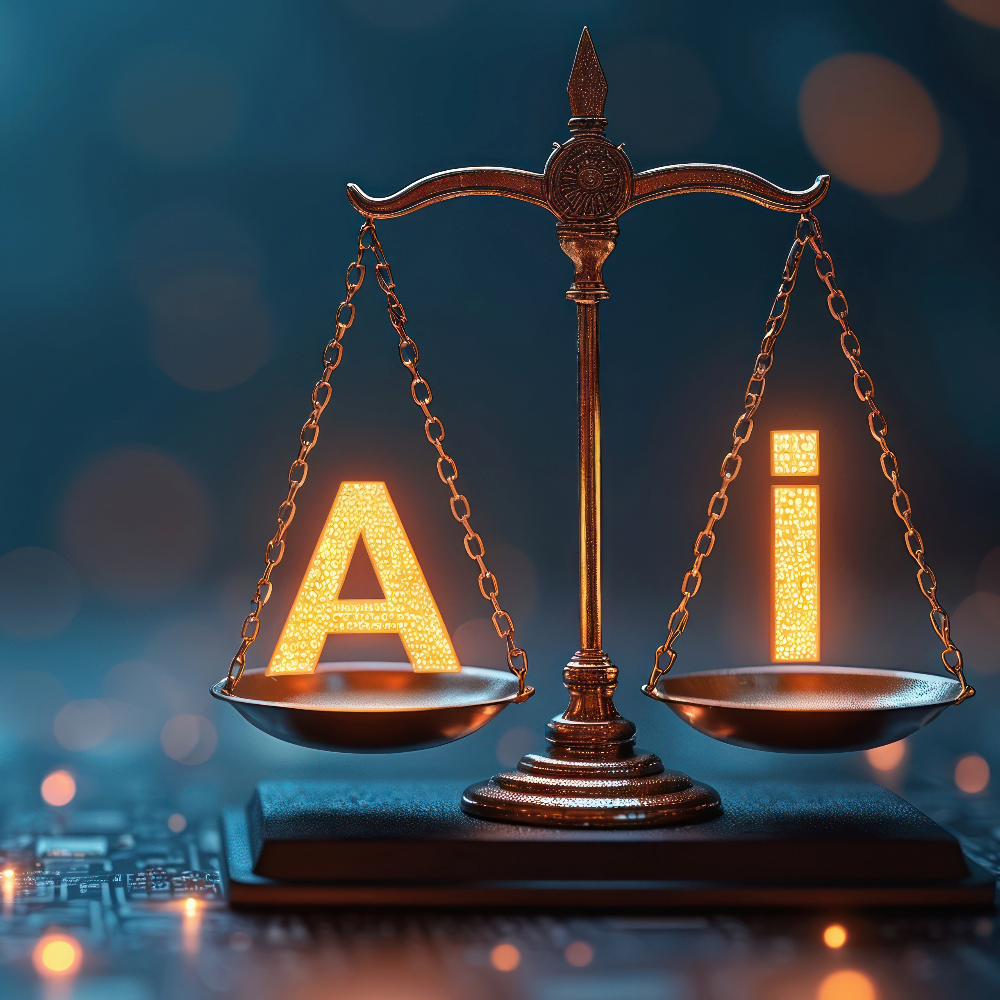
New! Wharton Accountable AI Forum
We invite you to explore the Wharton Accountable AI Lab’s forum for discussions on AI governance, ethics, and regulation.
For questions or submission inquiries, please email aiforumeditors@wharton.upenn.edu.

Road to Accountable AI Podcast
Professor Kevin Werbach interviews top global experts on the state of practice around responsible, safe, and trustworthy AI, as well as major legal and regulatory developments.

Strategies for Accountable AI
An up-to-the-minute, comprehensive roadmap for effective AI oversight, enabling you to implement or modify systems and processes so they are responsible, safe, trustworthy, ethical, and legally compliant.
Next course dates: March 30 – June 1, 2026
Harnessing the Power of Partnership
We are always looking to partner with companies and AI labs that share our commitment to advancing responsible AI governance.
If you are interested in collaborating with us, please contact Tania Rorke, Senior Associate Director of Corporate & Donor Engagement, Wharton AI & Analytics Initiative.
Join our mailing list to hear about the Lab’s research, events, and more.

Contact
Academic Research Building
265 S. 37th Street, Third Floor
Philadelphia, PA 19104
accountableai@wharton.upenn.edu