


News
How the Wharton AI & Analytics Accelerator Helped Penn Vet Turn Data Into Action
When Penn Vet joined the Wharton AI & Analytics Accelerator in Fall 2025, the goal was clear but ambitious: make better use of years of client and hospital data to strengthen engagement, fundraising, and long-term strategy. For Chase Engel, Assistant Director of Annual Giving, and Sarah Trout, Associate Director of Advancement Services, the Accelerator offered a rare opportunity to step back from day-to-day operations and ask deeper, data-driven questions about how Penn Vet connects with its community.
“We’ve always known we have a lot of data,” Trout said. “But we didn’t have the tools or resources to really analyze it in a way that could change how we work.”
Through the Accelerator , an experiential learning program run by the Wharton AI & Analytics Initiative (WAIAI), Penn Vet partnered with a multidisciplinary team of Wharton and Penn students who worked directly with the organization’s real-world data and business challenges.
A Real Business Problem With Real Stakes
At the center of Penn Vet’s project was a fundamental question: how could the organization better understand its hospital clients and alumni in order to communicate with them more thoughtfully and effectively?
Engel, who oversees annual giving strategy, explained the challenge in practical terms. “Each year, we reach out to alumni and hospital clients to see if they’d like to support scholarships, research, or patient care,” he said. “The question we brought to the students was how we could segment our audiences in a way that lets us speak to what actually matters to them — not just send the same message to everyone.”
While Penn Vet had decades of historical data, much of it lived in legacy systems and wasn’t structured for modern analytics. Initially, that raised concerns.
“I had no doubt about the students’ abilities,” Trout said. “My biggest concern was whether the data would even be usable.”
Working Side by Side With Students
Over eight weeks, Engel and Trout met regularly with the student team, walking them through Penn Vet’s operations, fundraising processes, and data limitations. Early meetings focused on context – what the data represented, how campaigns were run, and where internal pain points existed.
“The beginning of the project was very collaborative,” Trout said. “We spent time explaining how the hospital works and what we were already doing so the students could see where the gaps were.”
As the project progressed, students applied clustering techniques and other analytical methods to identify patterns in engagement and giving behavior. Just as importantly, they checked their work with Penn Vet stakeholders along the way.
“There was a constant line of communication,” Engel noted. “They’d show us what they were finding, and we could say, ‘Yes, that aligns with what we see,’ or ‘Here’s how that plays out in real life.’ That feedback loop made a huge difference.”
From Analysis to Insight
For both Engel and Trout, one of the most striking aspects of the Accelerator was how quickly the students translated complex analysis into usable insights.
“They approached the problem without assumptions,” Engel said. “That helped us see new possibilities, not just based on when someone last gave, but on things like timing around hospital visits or different points of connection to Penn Vet.”
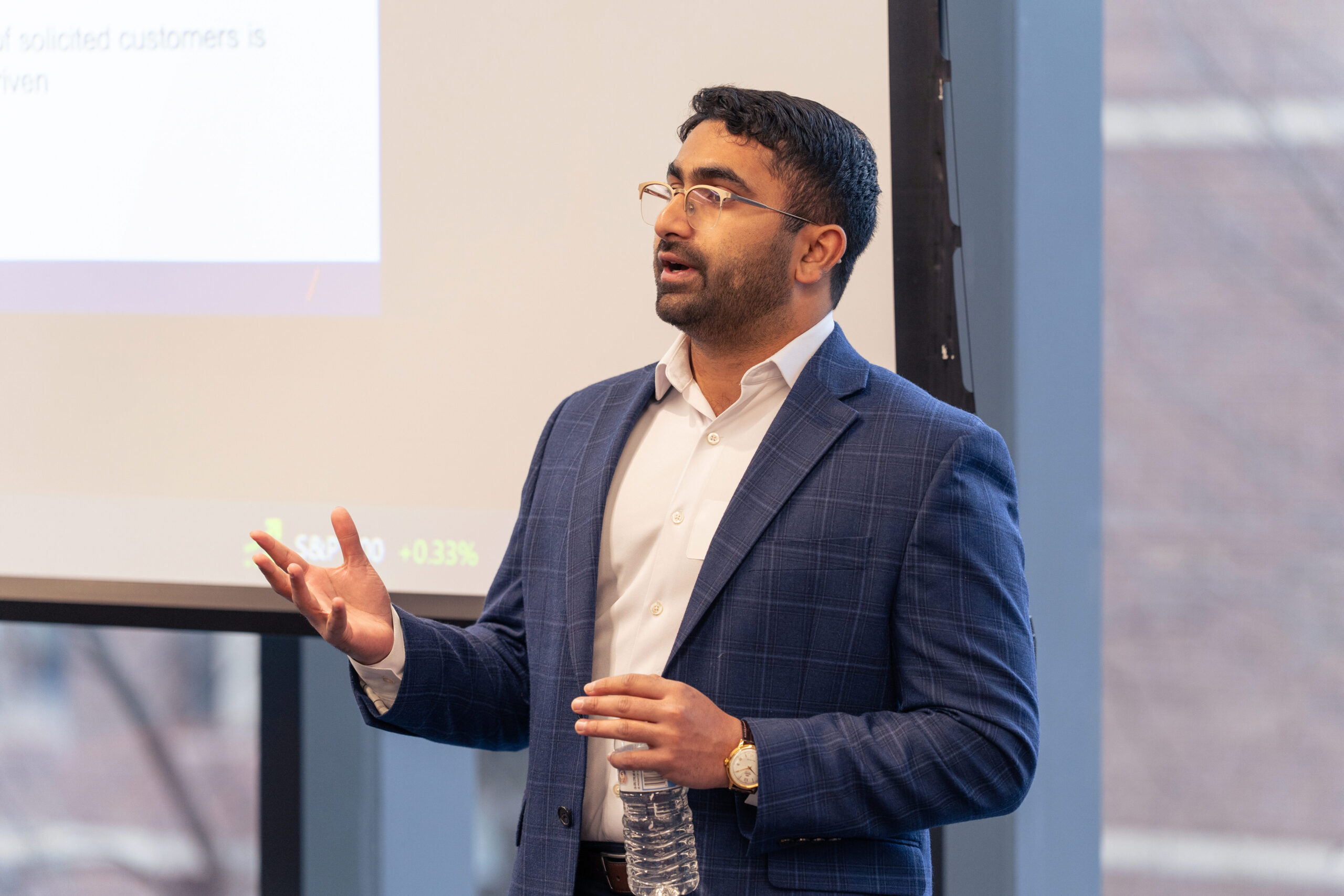
At the Accelerator Summit – the final, in-person culmination of the semester’s work – Penn Vet leaders who hadn’t been involved in the weekly meetings were able to see the results firsthand. The students presented clear recommendations and demonstrated a dashboard designed to support ongoing testing and refinement.
“It was really powerful for our leadership to see that we brought a real problem to the students, and they came back with something tangible,” Trout said. “Not just ideas, but tools we can actually use.”
Accelerating What’s Possible
Looking back, both Engel and Trout emphasized that the Accelerator didn’t just deliver a single project outcome, it changed how Penn Vet thinks about data and decision-making.
“Without the Accelerator, we’d still be doing business as usual,” Trout reflected. “We might make small tweaks, but we wouldn’t have this broader, evidence-based picture. This moved us years ahead of where we would have been.”
Engel echoed that sentiment, pointing to the broader mission impact. “Better fundraising operations ultimately mean better care, better research, and better outcomes for the animals we serve,” he said. “The students didn’t just understand the data, they understood why the work mattered.”
Why Organizations Partner With WAIAI
Penn Vet’s experience highlights what the Wharton AI & Analytics Accelerator offers prospective partner organizations: focused analytical talent, structured collaboration, and results that extend well beyond a classroom exercise.
“We learned in eight weeks what would have taken us months, if not longer, to do internally,” Engel said. “And we came away with tools and insights we can keep building on.”
For organizations considering the Accelerator, Penn Vet’s story underscores the program’s core value: turning real data into real impact through close collaboration with the next generation of analytics leaders.
This content was created with the assistance of generative AI. All AI-generated materials are reviewed and edited by the Wharton AI & Analytics Initiative to ensure accuracy, clarity, and alignment with our standards.